
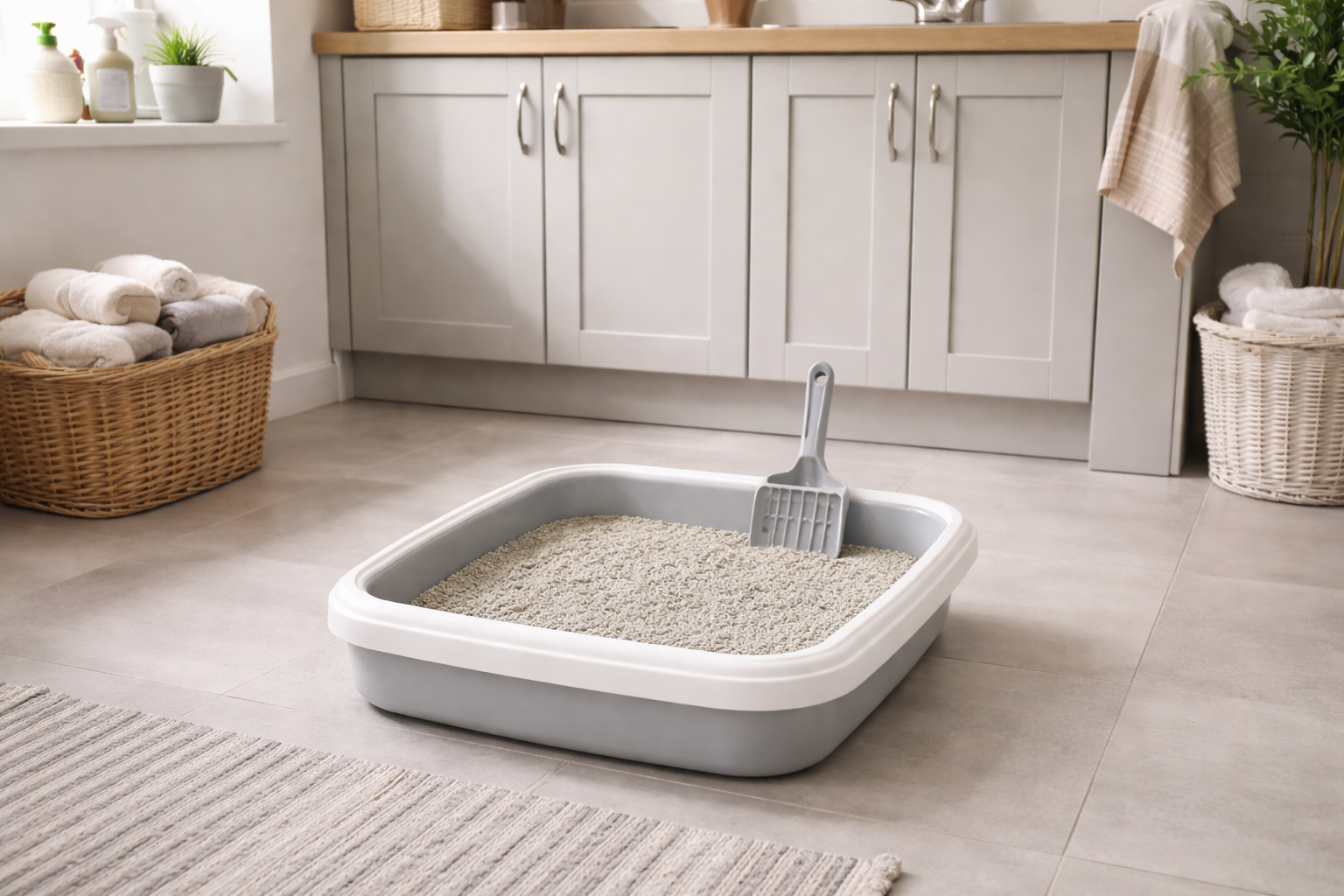
For any cat owner in Britain, the quest for the perfect cat litter is a balance between feline comfort and household hygiene. In the UK, where many of us live in terraced houses or flats with limited utility space, odour control and “tracking” (litter ending up on the carpet) are the two biggest challenges.
By 2026, the market has evolved significantly. While classic clay still has its fans, eco-friendly wood pellets and high-tech silica crystals have become mainstream. Choosing the right one isn’t just about what is cheapest—it’s about finding a substrate that your cat will actually use, preventing those frustrating “accidents” on the rug.
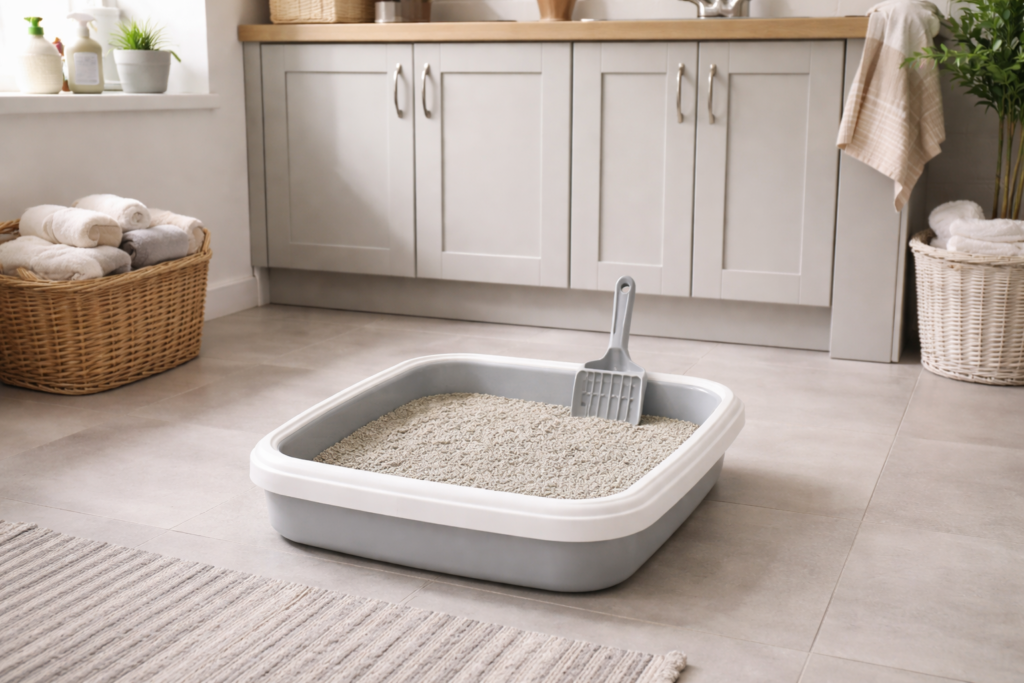
Understanding the Three Main Types of Litter
Before choosing a brand like Catsan or Pettex, you must understand the material. Each has a different “job” and cleaning routine.
1. Clumping Clay (The Traditional Choice)
Clumping litter is usually made from bentonite clay. When it gets wet, it forms a hard “ball” that you can scoop out, leaving the rest of the tray clean.
- Pros: Easy daily cleaning; very effective at locking in liquid.
- Cons: Can be heavy to carry from the supermarket; some brands create “dust clouds.”
2. Non-Clumping (Hygiene Focused)
These litters absorb liquid but don’t form balls. Instead, the liquid filters through. You scoop the solids daily and replace the whole tray weekly.
- Pros: Often cheaper; great for kittens who might try to eat clumping litter.
- Cons: Odour can build up faster if the tray isn’t deep enough.
3. Wood Pellets (The Eco-Friendly Option)
Made from compressed sawdust, these pellets crumble into dust when wet. They are the most popular choice for environmentally conscious UK owners.
- Pros: Smells like fresh pine; 100% biodegradable; sustainable.
- Cons: Requires a specific “sieve” tray for the best results; some cats dislike the large pellet texture under their paws.
Top 5 Best Cat Litters in the UK 2026
Based on availability in major UK retailers like Pets at Home, Jollyes, and supermarkets, here are the top performers this year.
1. Catsan Hygiene Plus (Best Overall)
Catsan remains the gold standard for non-clumping litter in the UK. Its distinct white granules are designed to absorb liquid like a sponge before odours can develop. It is particularly popular for owners of white or light-coloured cats as it doesn’t leave “dusty paws” on the furniture.
2. Pettex Pampuss Woodbase (Best Value)
If you are looking for a bulk-buy option that won’t break the bank, Pettex is a household name. Their woodbase pellets are highly absorbent and provide a natural pine scent that masks ammonia effectively. It is one of the most reliable UK-made brands for multi-cat households on a budget.
3. World’s Best Cat Litter (Best for Multi-Cat Homes)
While more expensive, this corn-based clumping litter is legendary for its odour control. It is incredibly lightweight and, importantly for UK apartment dwellers, it is technically flushable (though always check your local water authority guidelines first!).
4. Ever Clean Extra Strong (Best for Odour)
If you have a small flat and the litter tray is near your living space, Ever Clean is the heavy-duty solution. It uses activated carbon to trap scents rather than just masking them with perfume.
5. Sanicat Diamonds (Best Silica/Crystal)
Silica litter is perfect for busy owners. These “crystals” absorb urine and evaporate the moisture, leaving the tray dry. Sanicat is widely available in the UK and is almost entirely dust-free, making it a great choice for owners with allergies.
How to Stop Litter Tracking in Your Home
“Tracking” is the term for those tiny grains of litter your cat carries out of the tray and onto your bed or sofa. In British homes with carpeted hallways, this can be a nightmare.
- The Double-Mat Strategy: Place a specialized “honeycomb” litter mat outside the tray to catch particles from their paws.
- Tray Depth: Ensure you have at least 2-3 inches of litter. If it’s too shallow, the cat will dig more aggressively, throwing litter over the sides.
- High-Sided Trays: Consider a top-entry or high-walled tray to contain the “flick” when they are burying their business.
Tips for Switching Litters
Cats are “neophobic,” meaning they often fear new things. If you decide to switch from wood pellets to clay, don’t do it overnight.
- Day 1-3: Mix 75% old litter with 25% new.
- Day 4-7: Move to a 50/50 split.
- Day 8+: Transition to 100% new litter. If your cat starts peeing next to the tray, they are telling you they hate the texture—go back a step!
Frequently Asked Questions
Which litter is best for a new kitten?
Always choose a non-clumping litter for kittens under 4 months. Kittens are curious and may try to eat the litter; clumping clay can swell inside their stomach and cause a dangerous blockage.
Is wood pellet litter better for the environment?
Yes. Wood pellets are usually made from waste sawdust from the timber industry and are biodegradable. Clay litter is strip-mined and ends up in UK landfills.
How often should I fully clean the tray?
For non-clumping, a full wash and fresh litter should happen every 7 days. For high-quality clumping litter, you can go 2–4 weeks as long as you are scooping out the clumps daily.